
Ridgeline Corridor
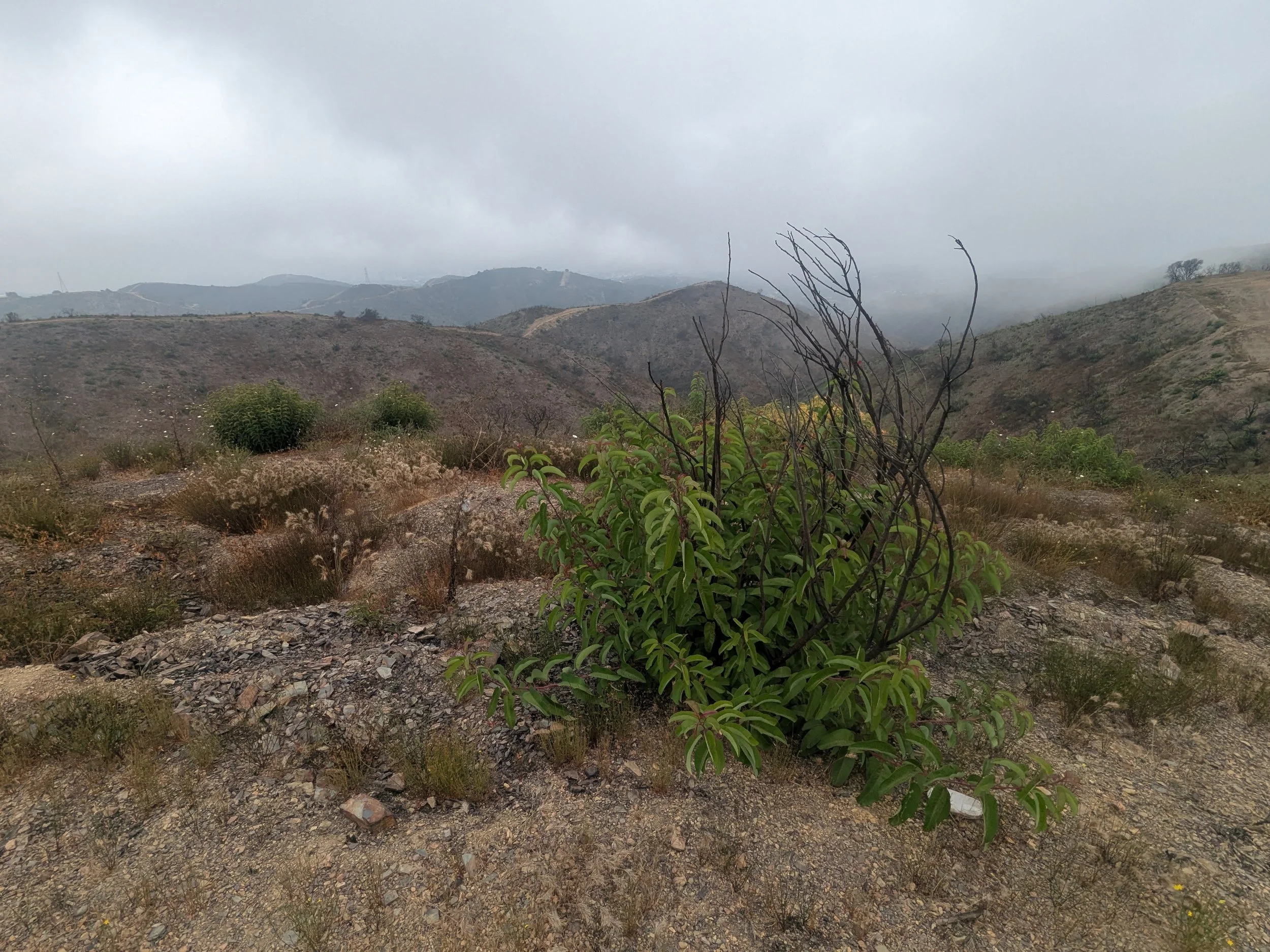
Mandeville Canyon is alive with outdoor lovers of all varieties. Hikers, mountain bikers, dogs and runners infuse its trails with energy from dawn to dusk. The Palisades Fire threatened that energy when it swept through the area in January 2025 – but it never extinguished it. Its trails have reopened, and signs of renewal are everywhere. Green shoots curl around blackened tree branches. Laurel sumac and California buckwheat are surfacing amid the carpets of dry non-native grasses. Nature is fighting back and winning, gently and cautiously.
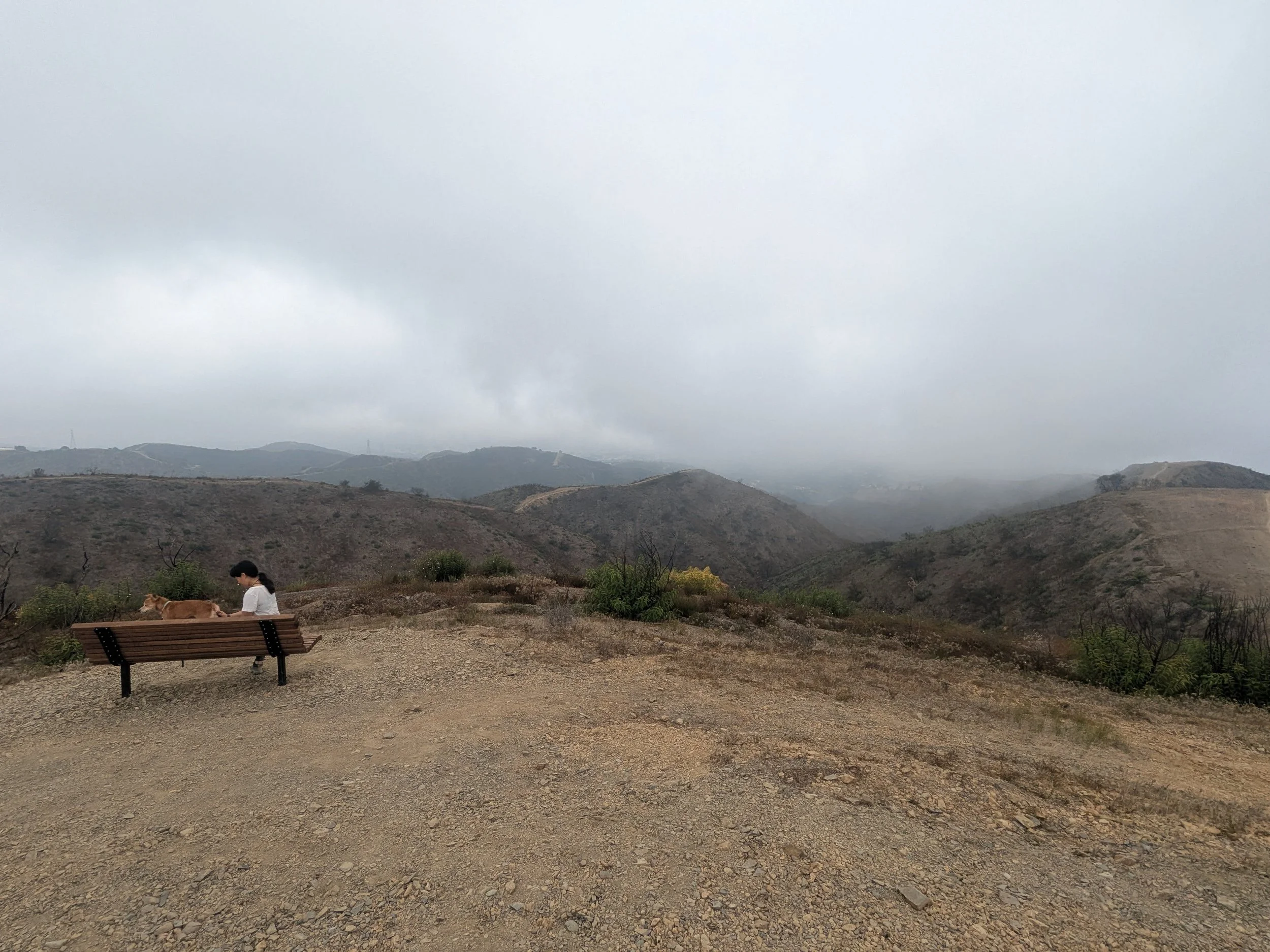
High above Mandeville Canyon fire road, accessible via a short, steep hike, sits a bench from which one can survey the recovery and joyous return of recreation to the canyon.
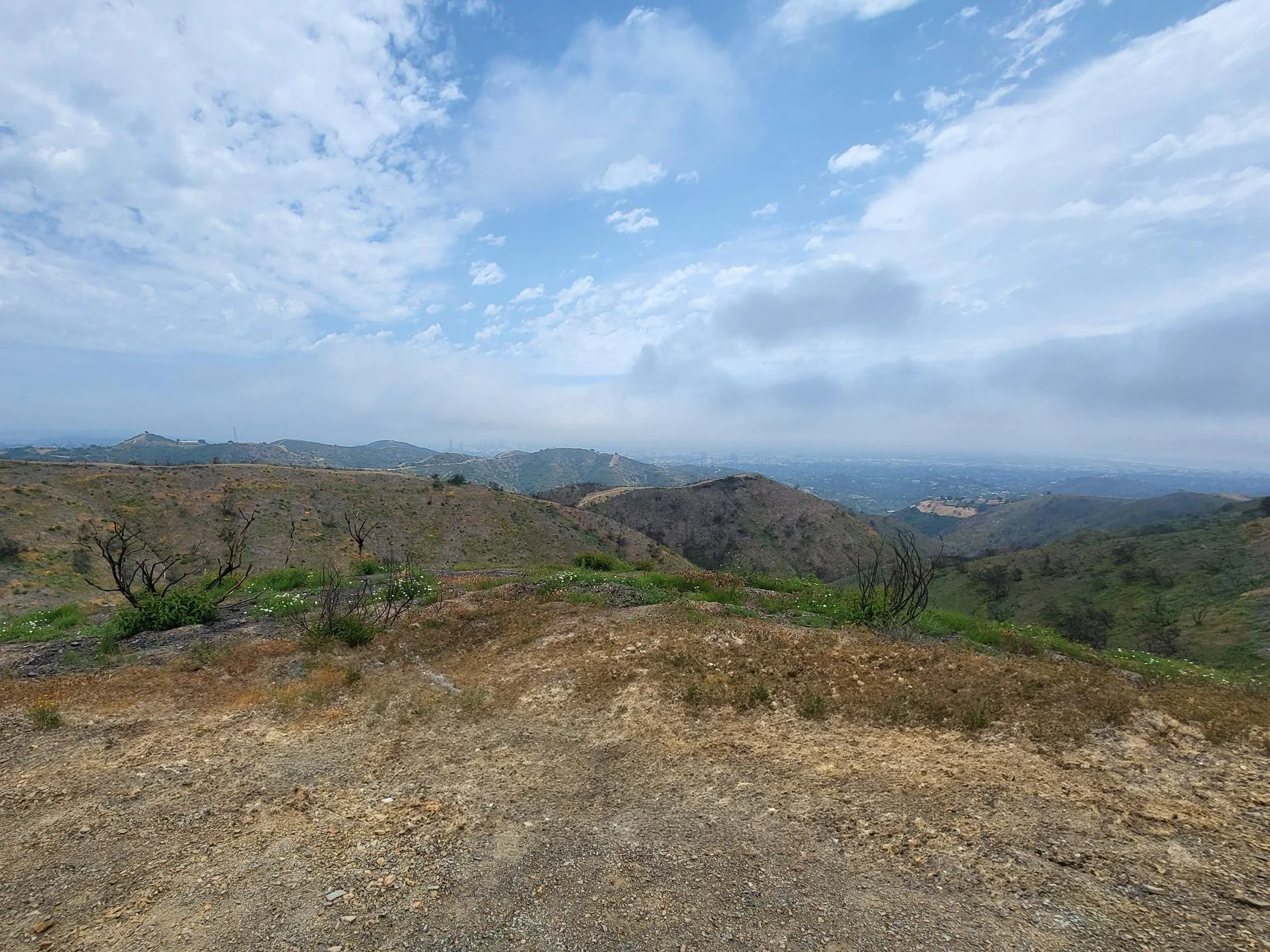
Some mornings, the cool marine layer adds a note of tranquility and the feeling of being on top of the world. Clear and sunny days, meanwhile, yield sweeping views of the Santa Monica Mountains and downtown Los Angeles – distant, vivid, full of promise.
The Palisades fire in January 2025 raged uncontrollably through the Pacific Palisades and portions of the Santa Monica Mountains, including Mandeville Canyon in Westridge-Canyonback Wilderness Park. In the weeks after containment, officials asked hikers and cyclists to avoid the area while power lines were restored and Mountains Recreation and Conservation Authority rangers and restoration specialists assessed weakened trees, loose rocks and other potential hazards. Six months later, the popular recreation hub reopened and serves as a fascinating lesson in wildfire recovery. Carpets of dried non-native grasses give way to clusters of California buckwheat – a welcoming post-fire plant that provides erosion control and attracts butterflies and insects. The vines of native coast morning glory (a fire follower also known as island false bindweed) curl around blackened tree branches, its delicate white petals visible throughout the fire-scarred landscape. On a late summer visit, Cuscuta californica, also known as dodder, latched its tangled orange web onto coastal sage scrub and added random bursts of color along the trails. The native parasitic plant extracts nutrients from its host plants but rarely kills them. Nature continues to heal itself with time.
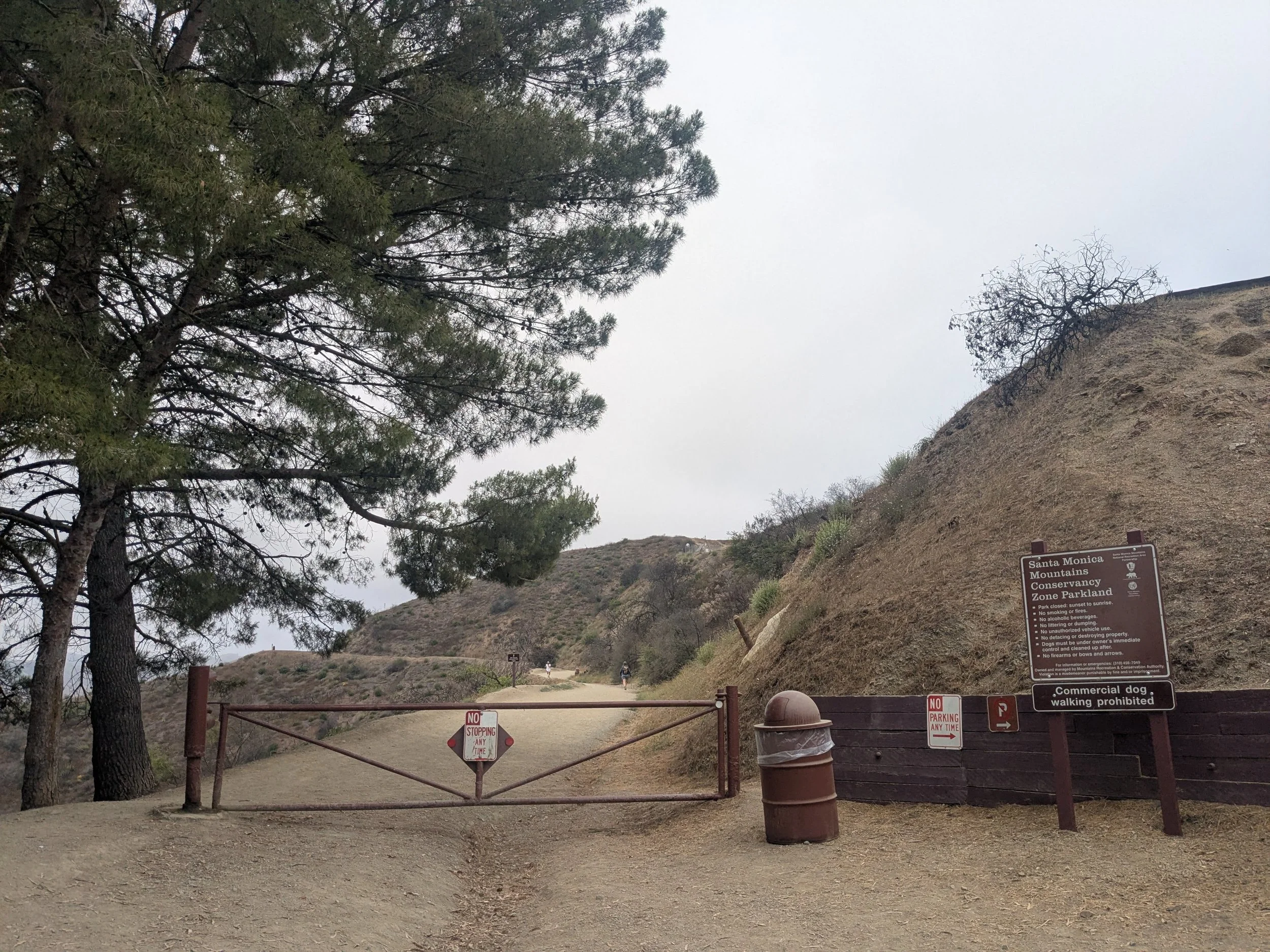
This is one of several benches located within Westridge-Canyonback Wilderness Park, and is located on the fire road near the southern entrance at Westridge Trailhead. Each bench is unique and offers a different view and experience within these 1,500 acres of protected open space between West Los Angeles and the San Fernando Valley.




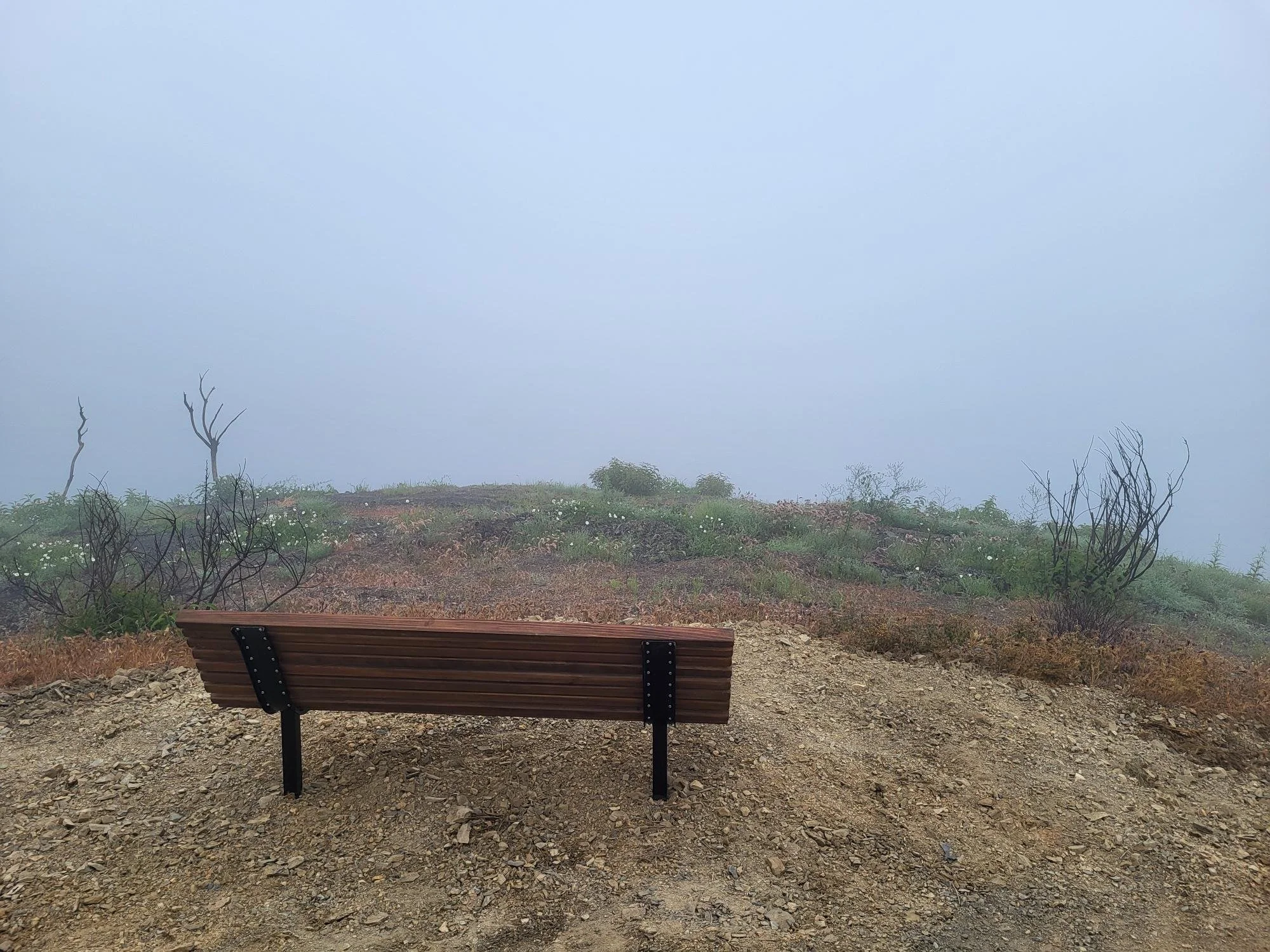
Bench coordinates: 34°05'59.0"N 118°30'50.0"W
-
The bench sits 1.3 miles north of Westridge Trailhead.
It can be reached via a 3.6-mile loop trail along Mandeville Ridge trail or an easier 2.6 mile out-and-back hike via the wide and well-maintained Mandeville Canyon fire road.
The terrain is rocky and steep at times with stretches of loose gravel. Hiking boots with a strong grip are recommended.
There is very little shade and the temperatures can reach triple digits in summer; a hat, sunscreen, and lots of water are recommended. WiFi and cell service is generally good.
The trail gets busy, especially on weekends. Expect to share the trails with dogs and mountain bikers.
-
Walk past the gate to the wide fire road and follow it north for 0.5 mile. You will come to a split near a sign for Westridge-Canyonback Wilderness Park. From there, take one of two options: 1) Stay to the right and follow the single-track Mandeville Ridge trail another 0.5 mile to a second split, or 2) Continue left on the fire road another 0.5 mile and pick up the ridge trail at the next split.
From here, it’s a steep 0.3 mile hike to the bench.
For a moderate out-and-back hike, turn around at the bench and retrace your steps back to the trailhead parking lot.
For a more challenging loop hike, continue on Mandeville Ridge Trail for 0.3 mile, then turn right at the T and follow the trail south along the eastern ridge. The first half-mile is flat, then the trail descends into a canyon of trees and chaparral scarred by the 2025 Palisades fire. A final brief ascent brings you back to Mandeville fire road. Follow it south back to the trailhead parking lot.
-
From the 405 freeway, exit at Sunset Boulevard and head west 5 miles to Mandeville Canyon Road.
Turn right on Mandeville Canyon Road and continue 0.3 mile to Westridge Road. Turn left and drive 2.3 miles until Westridge Road ends at the trailhead parking lot.
-
There is a small parking lot at the north end of Westridge Road and free street parking south of the lot along Westridge Road and Cordelia Drive. Be respectful while walking in the neighborhood, and heed all parking signs.

Thanks to our sponsor